The following post was published on the Palo Alto Foundation Medical Group blog on July 24th, 2023. The post, and in fact the entire PAFMG blog, have since been taken down.
At times, some of our clinicians desire to share personal opinion pieces around their experiences in the community, at PAFMG or about health related issues. These posts represent the opinions of the author and not of PAFMG Leadership nor the PAFMG Board.
By: Aly Mohamed, MD
The Israeli government does not represent all Jews, and criticizing the Israeli government’s policies is not an attack on Jewish peoples or the Jewish faith. The popular narrative which frames violence in the Holy Land as a centuries-long religious dispute is historically inaccurate, Muslims and Jews have a rich history of peaceful coexistence. Many Jewish individuals and organizations speak out in defense of Palestinian civil and human rights. The author of this post cherishes and celebrates our Jewish and Palestinian colleagues and friends.
I first met Atta Elayyan when we were young children. My family had just moved to Corvallis, Oregon, from Chicago, and Atta quickly became my first close friend. Atta was always eager to share the delicious food, beautiful music, and rich history of Palestinian culture with me. Through our friendship, I learned about the vibrant and diverse society that exists within Palestine.
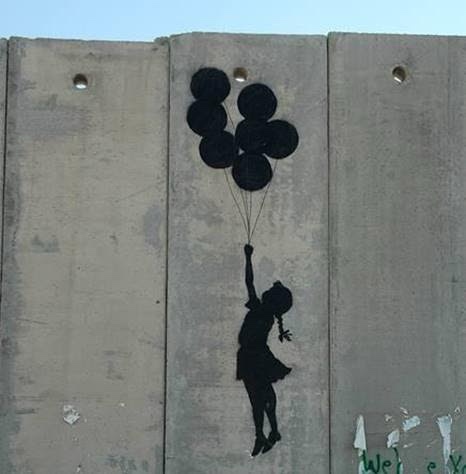
My friendship with Atta also taught me about the significant barriers Palestinians face in accessing healthcare services. Essential healthcare services, which are a fundamental human right, are severely restricted for Palestinians due to the Israeli occupation. The occupation restricts Palestinian access to medical facilities, medical supplies, and essential resources such as food and water. Compounding this is Israel’s control over all Palestinian movement, with numerous military checkpoints and roadblocks, and a separation wall throughout the West Bank and Gaza Strip. The blockade of Gaza since 2007, one of the most densely populated regions of the world and home to almost two million people, has led to preventable deaths and the exacerbation of chronic illnesses.1-11
The dire healthcare situation for Palestinians is aggravated by the killing of healthcare professionals and destruction of healthcare facilities by Israeli forces.1,2,4,5,8,12-16 International organizations have documented numerous incidents where Israeli forces have destroyed hospitals and clinics, and blocked ambulances. Healthcare workers have been killed in clear violation of international humanitarian law. These actions show a disregard for Palestinian civilians access to essential healthcare services.
The Israeli occupation not only violates international humanitarian law by targeting healthcare professionals and facilities but also perpetrates systemic dehumanization acts against the Palestinian population, including the use of laws that allow for indefinite administrative detention without charge.1-5,10 Palestinians are subjected to frequent demolitions of their homes and communities without warning or legal justification, with over 50,000 Palestinian homes and structures demolished in the occupied territories since 1967.1,2,5,8,10,17 The crisis is particularly acute for Palestinian children as they experience arbitrary detention, physical and emotional abuse, 28 systematic denial of fair trial, 18 and higher rates of mental health disorders compared to children in other war-torn regions.19
Israel’s policies of land confiscation, settlement expansion, and discriminatory laws against Palestinians have been condemned by major international and Israeli human rights organizations and experts as a form of apartheid, similar to the regime in South Africa.1-4 This system of supremacy is defined by systematic discrimination and violence against Palestinians, erasure of their rights and existence, reinforcement of Israeli exceptionalism and Palestinian subjugation. 1-5,20,21 The US government provides diplomatic, military and economic support to Israel22 despite the extensive evidence of human rights abuses. In this way, we contribute to the prolongation of racial segregation and discrimination, just as we did for the apartheid regime in South Africa.22 Criticism of Israeli policies is often met with accusations of anti-Semitism or terrorism sympathies, creating a climate of fear and intimidation, which hinders efforts to address the injustices facing Palestinians.24,25
“The UN took a strong stand against apartheid; and over the years, an international consensus was built, which helped to bring an end to this iniquitous system. But we know too well that our freedom is incomplete without the freedom of the Palestinians.” – Nelson Mandela
It is crucial to understand that standing against the occupation of Palestine and criticizing the Israeli government’s policies is not an attack on Jewish peoples or the Jewish faith, but rather an affirmation of our commitment to human rights and social justice. Many Jewish individuals and organizations have spoken out against the occupation and advocated for Palestinian rights. A 2021 survey commissioned by the Jewish Electorate Institute found that 34 percent of American Jews agreed that “Israel’s treatment of Palestinians is similar to racism in the United States.”26 Some 25 percent agreed that “Israel is an apartheid state.”
Atta’s tragic murder in the 2019 Christchurch massacre by a white supremacist was personally devastating, and serves as a reminder that any form of racial supremacy is wrong and dangerous.27 A movement of Americans of conscience is needed to ignite a change in U.S. policy. As healthcare providers we are in a unique position to advocate for principles of health equity and social justice. As we reflect on the memory of Atta and the plight of the Palestinian people, let us work towards a world where the basic human rights of all peoples are respected.
References:
- Israel’s apartheid Against Palestinians. Cruel System of Domination and Crime Against Humanity. Amnesty International. 2022.
- A threshold crossed: Israeli authorities and the crimes of apartheid and persecution. Human Rights Watch, 2021.
- A regime of Jewish supremacy from the Jordan River to the Mediterranean Sea: This is apartheid. B’Tselem. 2021.
- Apartheid in the Occupied West Bank: A Legal Analysis of Israel’s Actions. The International Human Rights Clinic at Harvard Law School, Addameer Prisoner Support and Human Rights Association. 2022.
- Health conditions in the occupied Palestinian territory, including east Jerusalem, and in the occupied Syrian Golan. World Health Organization. 2022.
- The humanitarian impact of 20 years of the barrier. United Nations Office for the Coordination of Humanitarian Affairs. 2022.
- Gaza Strip: The humanitarian impact of 15 years of the blockade. United Nations Office for the Coordination of Humanitarian Affairs. 2022.
- Right to Health in the occupied Palestinian territory. World Health Organization. 2018.
- Movement and access in the West Bank. United Nations Office for the Coordination of Humanitarian Affairs. 2017.
- Lynk, M. Report of the special rapporteur on the situation of human rights in the Palestinian territories occupied since 1967. Special Rapporteur Report A. Vol. 60. HRC/44, 2020.
- Right to Live Without a Blockade. Oxfam. 2022.
- Mounting evidence of deliberate attacks on Gaza health workers by Israeli army. Amnesty International. 2021.
- Bachmann, Jutta, et al. Gaza 2014: Findings of an Independent Medical Fact Finding Mission. Physicians for Human Rights-Israel, Al Mezan Center for Human Rights-Gaza, Gaza Community Mental Health Programme, Palestinian Center for Human Rights-Gaza. 2014.
- Israel/Occupied Palestinian Territories: Don’t Fire on Gaza Medics. Human Rights Watch. 2006.
- “Israeli soldiers deliberately and fatally shot Palestinian paramedic Rozan a-Najar in the Gaza Strip”. B’Tselem. 2018.
- Chassey, C. Under attack: how medics died trying to help Gaza’s casualties. The Guardian (UK). 2009.
- Israel’s demolition of Palestinian homes: A fact sheet. The Israeli Committee Against House Demolitions.
- Arbitrary by Default: Palestinian children in the Israeli military court system. Defense for Children International. 2023.
- Trapped: The impact of 15 years of blockade on the mental health of Gaza’s children. Save the Children International. 2022.
- Khalidi, Walid. All That Remains: The Palestinian Villages Occupied and Depopulated by Israel in 1948. Washington DC: Institute for Palestine Studies, 1992
- Pappe, Ilan. The Ethnic Cleansing of Palestine. Oxford: One World Publications, 2006.
- US Foreign Aid to Israel. Updated March 1st, 2023
- Thomson, Alex. US Foreign Policy Towards Apartheid South Africa, 1948–1994: Conflict of Interests. Springer, 2008.
- 128 scholars warn: ‘Don’t trap the United Nations in a vague and weaponized definition of antisemitism. 2022.
- Human Rights and other Civil Society Groups Urge United Nations to Respect Human Rights in the Fight Against Antisemitism. Human Rights Watch. 2023.
- National Survey Of Jewish Voters. Jewish Electorate Institute. 2021.
- Mohamed, A. The cost of tolerating xenophobia is too great. The Oregonian. 2019.
- Injustice: Palestinian children’s experience of the Israeli military detention system. Save the Children International. 2023.
 Community for Justice and Equality Advocates
Leave a comment